How Short Form Content Is Winning the Reading Wars
When students read fewer words, sight-word-heavy strategies become more fragile. Phonics gives readers a way to decode unfamiliar words instead of depending on prior exposure.

When reading and literacy disappear, what do we lose? It is not just the ability to read books, magazines, comics, and menus. We lose access to ideas, independence, confidence, and the ability to keep learning without someone else translating the world for us.
Many struggling readers are not unable to read at all. Often, they have enough reading ability to blend in. They can get through simple text, avoid attention, and stay just below the threshold where peers or adults notice how hard reading actually feels.
That creates a familiar pattern: a student learns the basics, falls behind, becomes defensive about reading, and then avoids the practice that would help them catch up.
The worst response is to force that student to read publicly in front of peers. Shame does not build literacy. It builds resentment, avoidance, and a stronger desire to hide.

The Video That Says It All
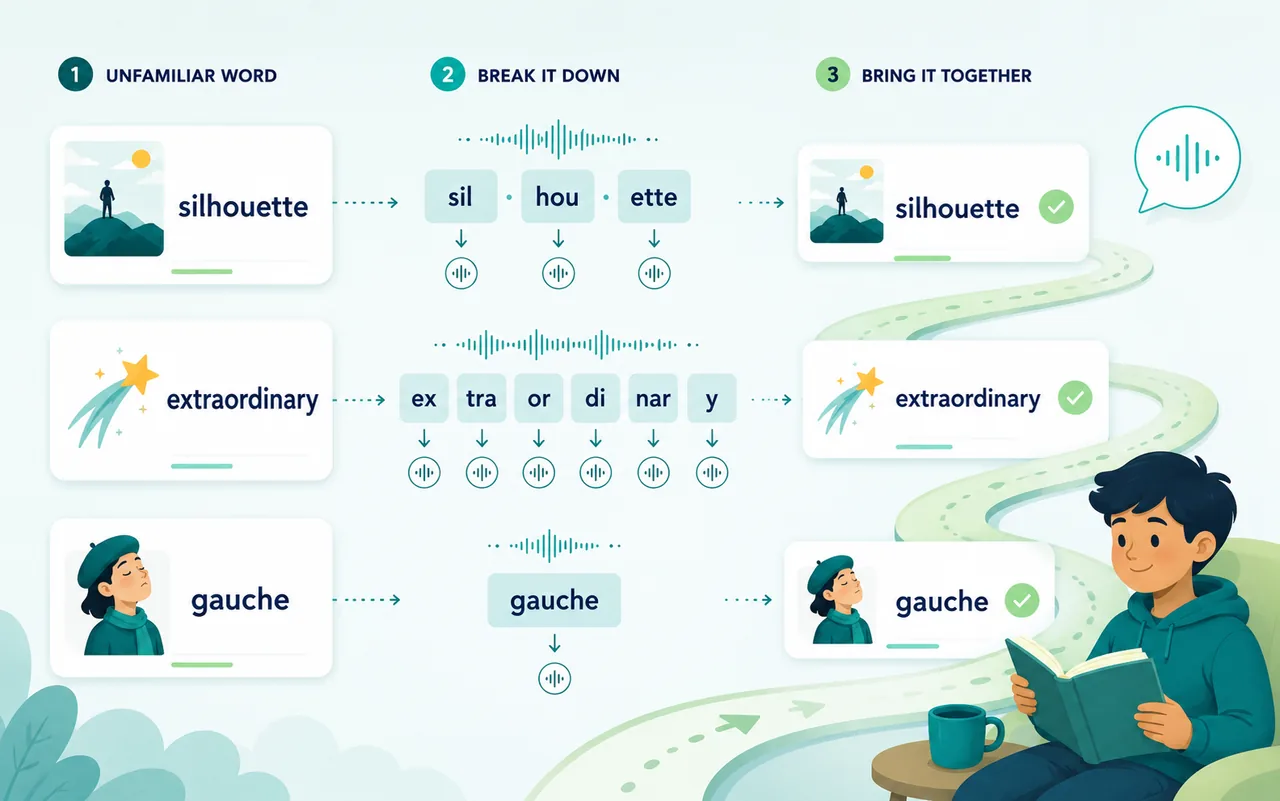
A recent video captured the problem clearly. A group of students were handed a short sentence on a card. The sentence was simple enough that high school students should have been able to read it, but several students struggled with a few unfamiliar words.
The most difficult words appeared to be the kind that readers may not encounter often in short-form digital environments.
- silhouette
- extraordinary
- gauche
If a student has never seen a word before, the brain cannot instantly recognize it as a familiar pattern. There is no established orthographic map for that word yet.
So what does the reader do? That question sits at the center of the science of reading.
The Reading Wars: Phonics vs. Sight Words
The reading wars are often simplified into a debate between phonics and sight words.
Phonics-based instruction teaches the relationship between letters and sounds. A student learns how letter patterns work and can use that knowledge to decode unfamiliar words.
Sight-word-heavy approaches emphasize recognizing whole words as units. In that model, reading develops partly through repeated exposure. The more often a reader sees a word, the more automatically they recognize it.
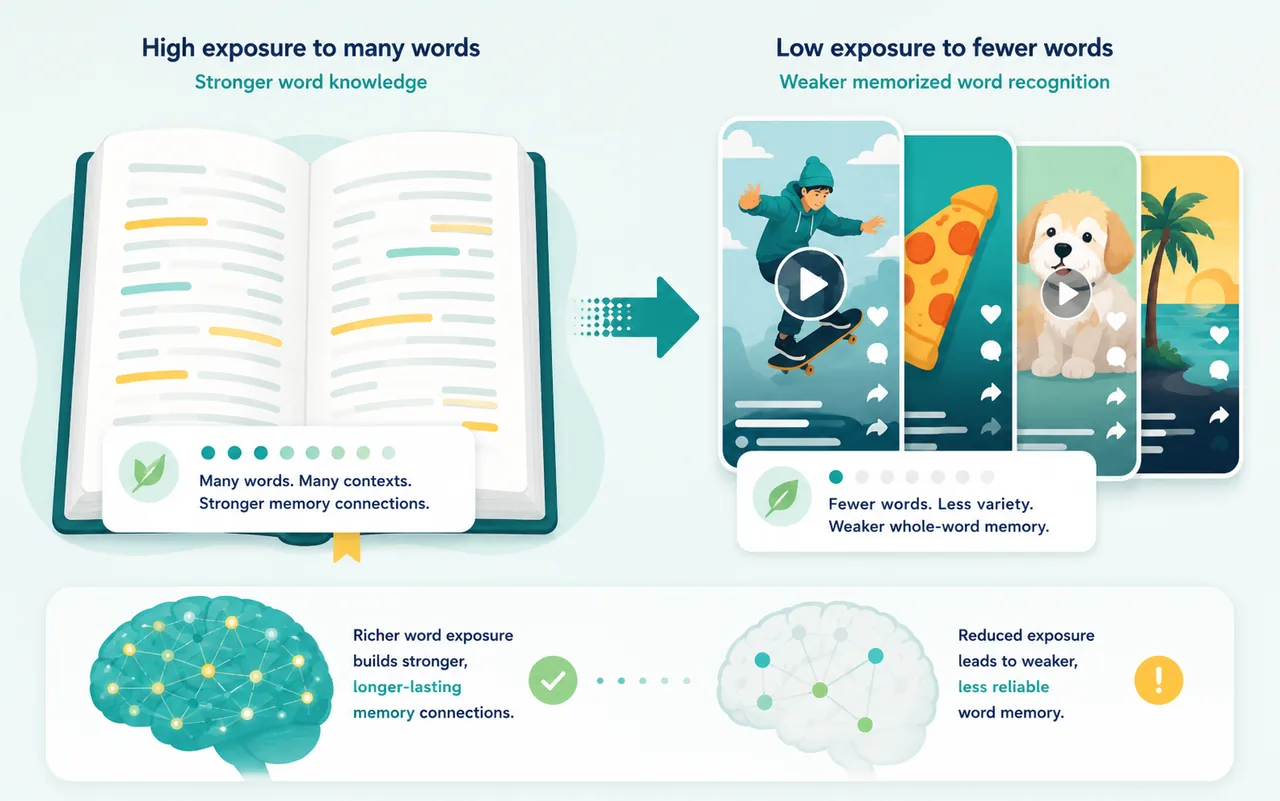
Both automatic recognition and decoding matter. But when students are seeing fewer words overall, a strategy that depends too heavily on repeated exposure becomes fragile.
Where Sight Words Fail
Short-form content has changed the reading environment. Where comics, books, magazines, and longer web pages once gave young people more exposure to written language, many students now spend more time with reels, shorts, and fast-moving feeds.
That does not mean every student is doomed by technology. It does mean the number and variety of words students encounter can shrink, especially when video replaces text.
If a reading strategy depends on drilling more familiar words into memory, but the world gives students fewer written words to meet, we should not be surprised when unfamiliar words become harder.
The Solution: Phonics-Based Reading
The good news is that we have a clear path forward: stronger phonics-based reading support. If students cannot rely on having seen every word before, they need to know how to approach unfamiliar words directly.
Books may not always compete with the entertainment value of social media, so the quality of reading instruction has to improve. Students need explicit tools for decoding, vocabulary growth, and comprehension.
This is not an argument for children to use social media. It is an acknowledgment that short-form content is already shaping literacy habits, and reading support has to respond to the world students are actually living in.
In a world where total words read per student may keep declining, phonics-based instruction becomes even more important. It gives readers a way to handle new words without waiting for repeated exposure to do the work.

At ReadCheck and Dr. Read, this is part of the mission: expanding human literacy, one reader at a time. The goal is not to shame students for what they missed. The goal is to give them better support so they can catch up with dignity.
Written by
Founder perspective
Co-Founder & CEO
Thore Weber
Thore is building Dr. Read to make the kind of patient, one-on-one reading support that helped him become a confident reader available to every reader and family who needs it.